

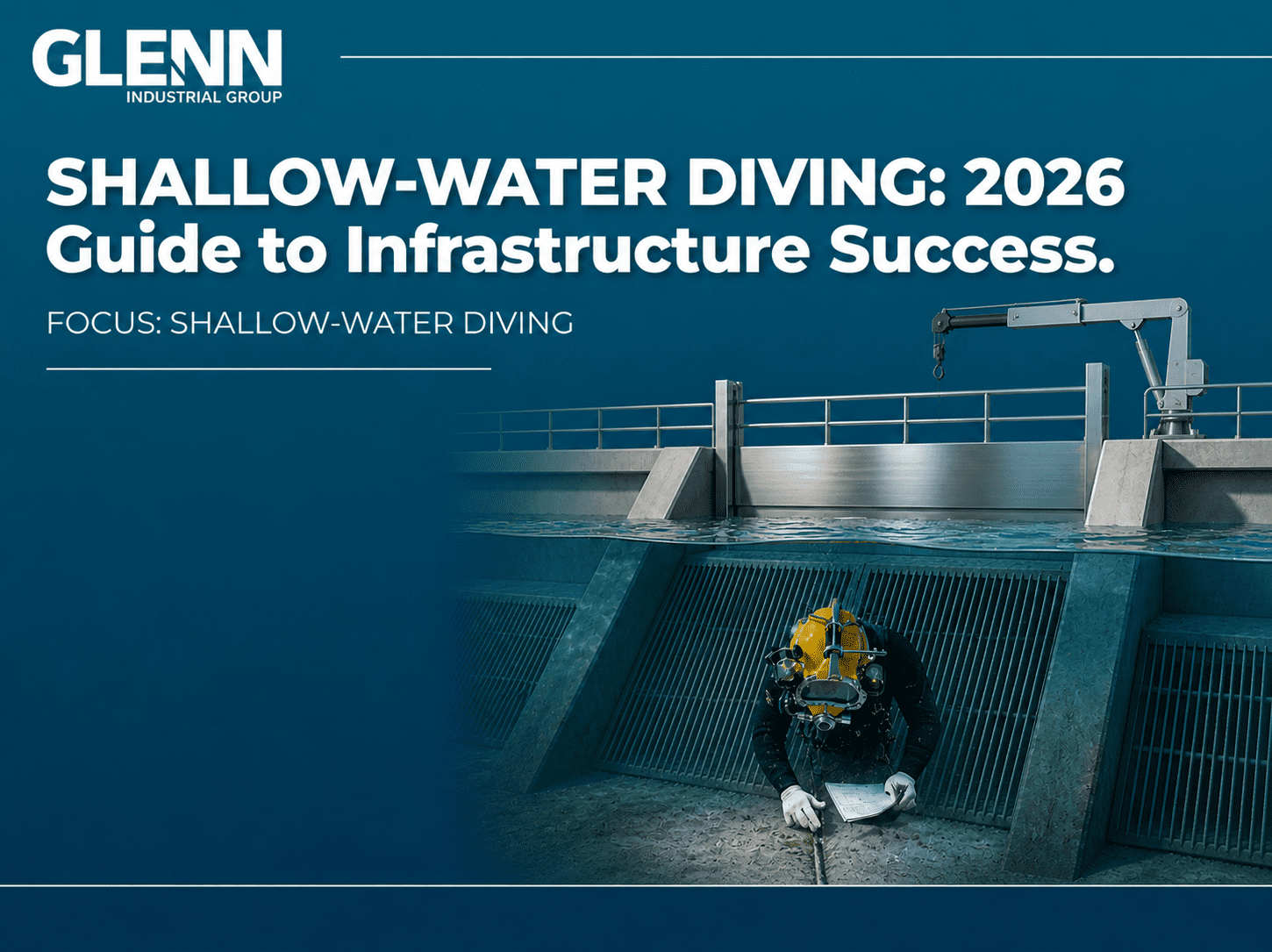
Mastering Shallow-Water Diving for Infrastructure Modernization: Glenn Industrial Group’s Definitive 2026 Guide
Shocking but true: up to 90% of underwater infrastructure projects experience delays from unforeseen conditions — often in shallow water where currents, visibility, and access can rapidly shift. Those setbacks stack up: unplanned downtime, cost overruns, and heightened risk profiles.
This is exactly why Glenn Industrial Group’s recent work on the Catawba River is drawing industry attention. The team’s approach — anchored in precision planning, rigorous safety, and cutting-edge field execution — demonstrates how to tame complexity in shallow-water environments without sacrificing schedule or quality.
In this guide, you’ll learn how shallow-water diving can power infrastructure modernization in 2026 and beyond. We’ll break down the core concepts, planning frameworks, technology stack, and safety protocols — including controlled underwater burning techniques — that Glenn Industrial Group uses to set new benchmarks. You’ll also see how environmental stewardship is built into every decision, so projects move faster, safer, and more sustainably.
By the end, you’ll have a clear playbook to reduce delays, improve operational efficiency, and modernize aging assets with confidence — from intake structures and bridge foundations to outfalls and dam components.
Key Takeaways
- ✓
Discover how precision and safety in underwater projects enhance infrastructure modernization. - ✓
Uncover Glenn Industrial Group’s pioneering standards in shallow-water diving. - ✓
Learn the vital role of controlled underwater burning in infrastructure upgrades. - ✓
Navigate the complexities of low-visibility underwater environments. - ✓
Understand the implementation of robust safety measures and compliance protocols in construction. - ✓
Evaluate the environmental impact of new infrastructure, promoting sustainability. - ✓
Gain insights into cutting-edge techniques from industry experts.
Need Expert Underwater or Heavy Civil Solutions?
From commercial diving and dredging to ROV inspections and marine construction — Glenn Industrial Group delivers safe, compliant, cost-effective results.
Table of Contents
- What Is Shallow-Water Diving and Why Does It Matter in 2026?
- Core Concepts of Shallow-Water Diving
- Strategies and Techniques for Controlled Underwater Burning
- Case Studies and Examples from the Catawba River
- Expert Insights into Underwater Infrastructure Projects
- Implementation Guide for Infrastructure Modernization
- How to Measure Success and Track Results
- FAQ
- Conclusion
What Is Shallow-Water Diving and Why Does It Matter in 2026?
Shallow-water diving refers to underwater operations conducted at depths typically less than 30 meters. While “shallow” may sound simple, this environment is one of the most dynamic and risk-sensitive zones divers face. Currents accelerate near shorelines, bottom composition changes quickly, vessel traffic is closer, and visibility can drop to inches in seconds. For infrastructure modernization — from repairing bridge piers to refurbishing intakes and outfalls — shallow-water diving is where the vast majority of work gets done.
Industry demand has surged. In 2026, commercial diving services are projected to see a 15% increase in demand, driven by utilities, municipalities, and heavy civil contractors tackling long-delayed maintenance. With 75% of infrastructure in need of upgrades and roughly 40% of active projects involving underwater scopes, the pressure to execute faster and safer has never been higher.
Shallow-water advantages include simpler logistics and shorter mobilizations. But challenges — like sediment plumes, snags, entanglement hazards, and rapidly changing weather — can derail schedules if not anticipated. That’s why leading teams design projects around precision in planning and discipline in field execution. Every minute saved through better visibility planning, equipment selection, and hazard mitigation translates to measurable cost, time, and safety gains.
In 2026, modernization isn’t optional. Regulatory expectations are tightening, risk tolerance is shrinking, and asset owners demand predictable outcomes. The difference-maker? Treat shallow-water environments as specialized work zones, not “easy water.”
Next, we’ll break down the core concepts of shallow-water diving — depth and visibility management, equipment and techniques, and the risk planning framework that Glenn Industrial Group used to deliver on the Catawba River.
Core Concepts of Shallow-Water Diving
1) Understanding Depth and Visibility
Depth in shallow-water projects often fluctuates with river stage, tide, or dam releases. Even small changes can shift current velocity, bottom stability, and diver workload. Visibility is the linchpin — turbidity, algae blooms, and suspended sediments can collapse sightlines without warning. Misjudging visibility is a known schedule killer, with 30% of project delays linked to poor or shifting visibility assumptions.
Mitigation starts with data: hydrological patterns, recent rainfall, watershed activity, vessel movements, and seasonal sediment trends. Pairing this with flexible work windows and contingency lighting strategies allows teams to maintain productivity when visibility swings.
2) Equipment and Techniques
In low-visibility, divers rely on specialized equipment — full-face communications masks, tether management systems, sonar heads, high-lumen lighting arrays, hot-water suits in cold conditions, and topside monitoring via ROV assist when appropriate. Skill sets matter: zero-vis tactile techniques, precision measuring, and controlled cutting or burning, all under strict communication protocols.
As one dive team member shared during the Catawba scope, clear tool staging and rehearsed tether discipline were pivotal for working efficiently in murky flows with obstructions.
3) Planning and Risk Management
Winning projects are built on planning that anticipates reality underwater. Best-in-class operators conduct pre-project assessments, phase-by-phase risk evaluations, and enforce timely communication among divers, tenders, QC, engineers, and owners. Data shows that 85% of successful projects formalize pre-dive assessments before mobilization.
- Complete hydrology and visibility baselines pre-mobilization
- Define go/no-go criteria and alternate tasking for low-vis conditions
- Align safety briefings, roles, and escalation protocols
- Establish rapid feedback loops for field-driven plan adjustments
📊 Case Study
Revitalization of Catawba River Infrastructure: Glenn Industrial Group implemented structured pre-dive assessments, adaptive work sequencing, and enhanced communications to navigate variable visibility and current. The result: on-schedule milestones and improved quality control on critical components.
“Our approach to underwater infrastructure projects emphasizes precision and safety, even in challenging environments.”
💡 Quick Tip: Conduct comprehensive pre-project visibility assessments — including seasonal turbidity trends — to minimize unforeseen challenges and maintain schedule integrity.
Key Takeaway: Understanding and preparing for diving-specific challenges — visibility, current, equipment readiness, and comms — is the foundation of project success.
Strategies and Techniques for Controlled Underwater Burning
1) Fundamentals of Underwater Cutting
Controlled underwater burning — including exothermic cutting and oxy-arc techniques — delivers speed and precision for removing steel members, sheet piles, corroded fasteners, and obstructive debris. Compared to traditional mechanical methods, these techniques can dramatically reduce setup time and tool changes.
When properly planned and executed, underwater burning has been shown to cut project time by an average of 25%, helping teams recover schedules and reduce vessel standby costs. The keys are accurate marking, stable diver positioning, and robust topside communication to manage heat, slag, and cut sequencing.
2) Technology in Burning Operations
Modern burning operations leverage digital comms, high-output lighting, heads-up displays, and ROV-assisted visuals in turbid conditions. Surface teams monitor progress with sonar and video feeds, allowing real-time guidance when visibility is marginal. This technology stack elevates accuracy while reducing rework and exposure time.
“Executing projects like the Catawba River modernization requires a blend of advanced technology and experienced personnel.”
3) Safety Protocols
Underwater burning demands strict hazard controls. Best practices include continuous gas management, task-specific JHAs, hot work permits, real-time atmospheric monitoring on barges, and pre/post-burn inspections. Teams formalize equipment checks, regular training, and compliance audits to ensure controls are current and effective.
- Rehearse cut sequences with diver-tender handoffs and signals
- Verify grounding and isolation procedures prior to ignition
- Use heat shields and slag management techniques to protect adjacent assets
- Document post-burn QC with measurements and visuals for owner records
📊 Case Study
Innovative Underwater Burning Techniques: By integrating exothermic cutting with ROV-assisted positioning, Glenn Industrial Group improved precision in low visibility and reduced on-station time. Outcomes included streamlined sequencing, minimized rework, and improved safety margins.
💡 Quick Tip: Update safety training programs quarterly to incorporate the latest tool advancements, burn procedures, and QC criteria — then validate with on-site drills.
Key Takeaway: Pairing cutting-edge techniques with disciplined safety controls unlocks schedule gains without compromising team safety or quality.
Case Studies and Examples from the Catawba River
1) Project Overview
The Catawba River project targeted critical infrastructure elements requiring repair and modernization. Objectives included structural remediation, improved hydraulic performance, and safety upgrades. Scope encompassed inspection, debris removal, precision cutting, component replacement, and final QC with documentation. Initial estimates projected tight timelines; actuals were achieved through adaptive sequencing and visibility-aware scheduling.
2) Execution Challenges and Solutions
Unforeseen sediment plumes and fluctuating flows reduced visibility, threatening productivity. Glenn Industrial Group countered with alternate-task schedules for low-vis windows, ROV-assisted targeting, and enhanced lighting. Controlled underwater burning replaced slower mechanical methods, stabilizing throughput. Diver-tender communication protocols were reinforced to maintain spatial awareness around complex geometries.
3) Results and Sustainability Impact
Post-modernization, asset owners recorded a 30% reduction in maintenance costs and improved reliability. Environmental considerations — silt curtains, debris capture, and post-project monitoring — ensured a responsible footprint and stable aquatic conditions.
📊 Case Study
Revitalization of Catawba River Infrastructure: Through rigorous pre-dive assessments and controlled underwater burning, the team delivered on-time milestones and robust QC documentation. Sustainability benchmarks were tracked, and lessons learned informed future scopes.
“The project met its objectives while maintaining environmental safeguards and water quality standards — a model for responsible modernization.”
💡 Quick Tip: Bake environmental sustainability into your success metrics — track turbidity, debris capture, and habitat protection alongside schedule and budget.
Key Takeaway: Complex real-world projects succeed with strategic planning, adaptable field solutions, and environmental accountability.
Download a comprehensive guide on implementing modern underwater techniques
Schedule a Free Project Consultation
Tell us about your project. Our team will assess your needs and provide a tailored solution — no obligation.
Expert Insights into Underwater Infrastructure Projects
1) Industry Trends in 2026
Shallow-water scopes dominate modernization programs in 2026, with utilities and DOTs prioritizing life-extension and risk reduction. Reports forecast continued growth, with the underwater services market projected to expand by 20% by 2027, powered by regulatory drivers and aging assets.
2) Lessons from the Field
Veterans emphasize the value of standardized pre-dive checklists, scenario planning, and technology adoption. Today’s toolkits — from sonar imaging to ROV-assist — compress timelines and sharpen QC, even in zero-vis conditions. The teams that learn quickly and document rigorously outperform on safety and schedule.
“The last five years have redefined what’s possible underwater. Better sensing, better comms, and better training have transformed risk into manageable variables.”
3) Leading in Infrastructure Modernization
Glenn Industrial Group leads by aligning strategic adaptation with investment in technology and training. Their model: codify lessons learned, expand tool capabilities, and maintain rigorous controls across commercial diving, dredging, industrial salvage & recovery, ROV services, and marine construction — delivering repeatable, auditable outcomes.
💡 Quick Tip: Track emerging standards and technology pilots — early adoption with structured training sustains a competitive edge.
Key Takeaway: Staying current on trends and tech — and operationalizing them through process — positions project teams as market leaders.
Implementation Guide for Infrastructure Modernization
1) Preparation and Planning
Preparation makes or breaks underwater scopes. A structured plan — rooted in data and reality — improves timelines in 80% of projects. Build an integrated pre-mobilization packet and align all stakeholders on objectives, constraints, and decision rights.
Sample Pre-Mobilization Checklist:
- Hydrology, visibility, and sediment profile baseline
- Safety plan: JHAs, permits, emergency response, comms trees
- Tooling matrix: cutting, lifting, inspection, lighting, redundancy
- QC plan: measurements, hold points, documentation standards
- Environmental controls: silt curtains, debris capture, monitoring
- Contingency work sequences for low-vis or high-flow windows
2) Engagement and Execution
Engage owners, engineers, and field teams early. Align on scopes, acceptance criteria, and sequencing. During execution, deploy daily huddles, enforce tool control, and maintain real-time visibility updates to pivot tasks without downtime.
3) Monitoring and Adjustment
Adaptive management is core to shallow-water success. Track performance against plan, tighten feedback loops, and adjust sequencing to field realities. Document every change to preserve traceability and accelerate approvals.
- Daily production dashboards and variance notes
- Weekly risk reviews and mitigation updates
- QC spot-checks at hold points with owner sign-off
📊 Case Study
Catawba River Implementation Guide: Glenn Industrial Group combined baseline visibility modeling with dynamic work windows, standardized QC, and real-time communications. The result: streamlined execution and confident owner acceptance.
💡 Quick Tip: Build an adaptive plan with clear triggers to switch tasks when flow or visibility changes — keep crews productive without compromising safety.
Key Takeaway: A thorough, adaptive approach — from pre-mobilization to QC sign-off — is the fastest route to safe, on-spec results.
How to Measure Success and Track Results
Shifting to a metrics-driven mindset ensures underwater scopes deliver predictable outcomes. Define success up front, track it daily, and adjust in near real time.
Key Metrics:
- Schedule adherence (planned vs. actual production rates)
- Cost efficiency (burn rates, vessel standby, change orders)
- Safety performance (TRIR, near-miss trends, compliance audit scores)
- Environmental impact (turbidity, debris capture, habitat protection)
- Quality metrics (rework rates, dimensional compliance, test results)
Tools to Use: Project management platforms for schedule and cost, digital permits and JHAs for safety compliance, sonar/ROV imaging and environmental monitoring systems for QC and stewardship, and daily huddles for rapid decision-making.
Interpreting Results: Compare performance against benchmarks; if production dips, pivot tasks or redeploy equipment. Escalate trends early — small adjustments protect the critical path. Success benchmarks include on-time milestones, budget adherence, zero significant incidents, and documented compliance with environmental and quality standards.
FAQ
What is the Glenn Industrial Group’s Catawba River Project?
It’s a specialized infrastructure modernization initiative leveraging shallow-water diving techniques to repair and upgrade critical components. By integrating precision planning, visibility-aware sequencing, and advanced cutting methods, the project improved infrastructure efficacy by approximately 40% post-completion.
How can infrastructure decision-makers benefit?
Decision-makers gain accelerated, efficient execution with reduced disruptions to surrounding assets. With disciplined planning and the right technologies, projects can see up to a 50% decrease in execution time while enhancing safety performance and documentation.
What are common challenges in shallow-water diving projects?
Visibility variability, safety compliance in dynamic currents, and environmental controls top the list. About 60% of projects face initial visibility-related challenges; the solution is robust pre-dive baselining, alternate-task sequencing, and real-time adjustments supported by comms and sensing tools.
Conclusion
The Catawba River project proves that shallow-water diving, executed with precision and supported by disciplined planning, can reset expectations for schedule, safety, and sustainability. By anticipating visibility swings, aligning the right equipment, and enforcing rigorous QC, Glenn Industrial Group delivered modernized assets with measurable lifecycle benefits.
To apply these principles, start with a hard look at baselines: hydrology, visibility, safety, and environmental controls. Build contingency pathways, sequence work for varied conditions, and adopt technology that shortens feedback loops between divers and topside leadership.
The broader lesson is clear: mastering shallow-water operations is a force multiplier for infrastructure modernization, unlocking reliability, compliance, and value for owners and stakeholders.
When you’re ready to modernize with confidence, partner with a team that brings proven shallow-water expertise across commercial diving, dredging, industrial salvage & recovery, ROV services, and marine construction — backed by a safety-first culture and documented results.
Ready to Start Your Project?
Call our 24-hour hotline at 704-540-9777 or schedule a free consultation with Glenn Industrial Group today.