

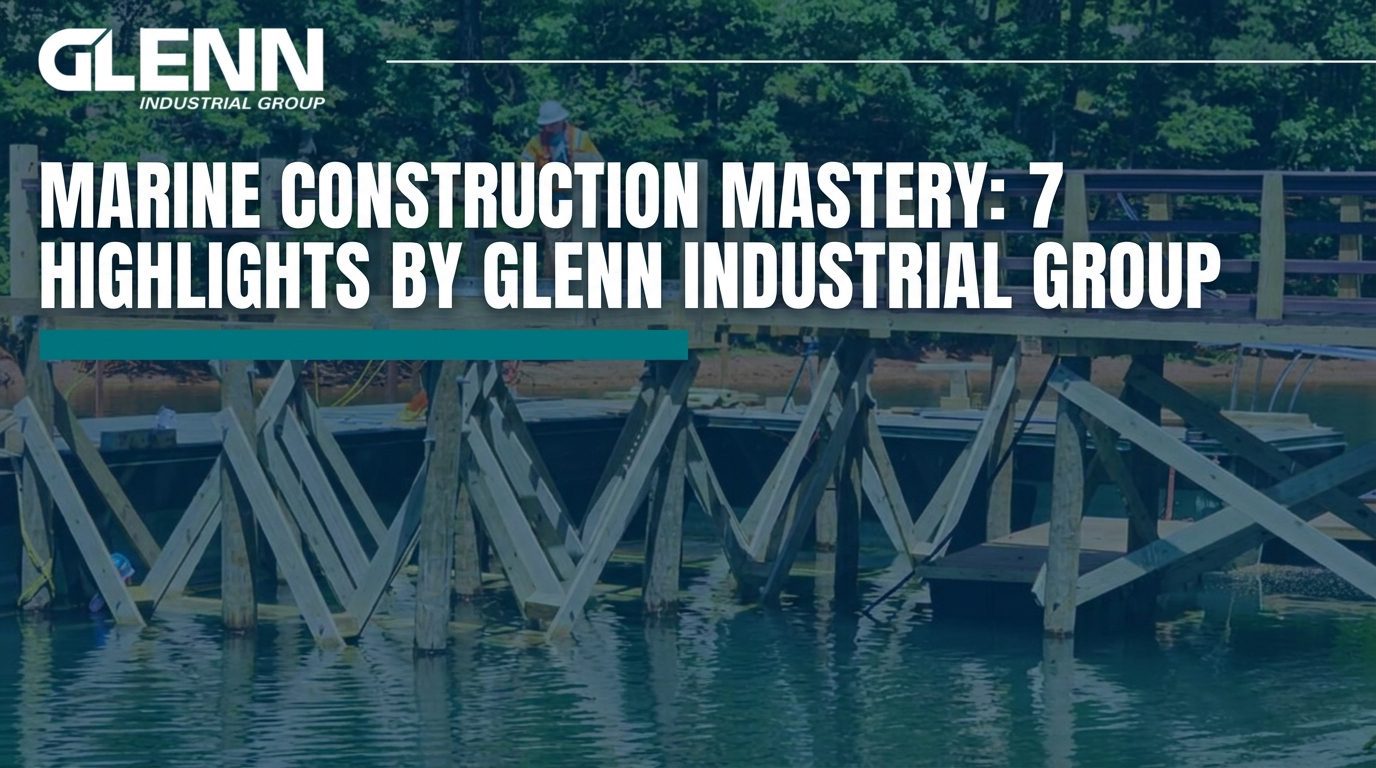
Marine Construction Mastery: How Glenn Industrial Group Excels in Diverse Waterfront Projects in 2026
Reading time: 10 minutes
Introduction
In 2026, as marine construction faces unprecedented challenges, one company’s ability to balance industrial rigor with community focus sets a new standard. The intricate dance of delivering large-scale industrial projects while elevating smaller community initiatives demands unparalleled coordination, safety, and craftsmanship. Enter Glenn Industrial Group—a leader in marine construction—fresh off a pivotal fishing pier project near South Carolina’s nuclear power facility, where precision and public benefit met without compromise.
For municipalities and industrial operators alike, the stakes are higher than ever. Coastal infrastructure must withstand harsher weather patterns and stricter regulations, especially when projects are executed adjacent to critical assets like nuclear stations or power utilities. Choosing a partner that can navigate complex permitting, maintain rigorous safety benchmarks, and still enhance recreational value is essential for long-term success and community trust.
By examining Glenn’s recent work, you’ll uncover how strategy, innovation, and field-tested processes converge to produce durable, high-performing assets that serve both industry and the public. From adaptive design to environmental stewardship, this article unpacks the methods that make Glenn Industrial Group uniquely capable of executing versatile marine construction—strengthening local communities while safeguarding critical infrastructure.
Key Takeaways
- ✓
Glenn Industrial Group excels in marine construction across diverse environments—from critical industrial zones to public waterfronts. - ✓
Proximity to a nuclear facility underscores adherence to stringent safety and compliance protocols. - ✓
Glenn’s blend of industrial and community-focused projects showcases true versatility and reliability. - ✓
The fishing pier project enhances recreational access and local quality of life in South Carolina. - ✓
Durability and craftsmanship define Glenn’s approach to coastal infrastructure and waterfront construction. - ✓
Environmental awareness and eco-friendly methods are embedded across planning and execution. - ✓
Municipalities and industries can rely on Glenn for safe, compliant, and cost-effective marine infrastructure.
Need Expert Underwater or Heavy Civil Solutions?
From commercial diving and dredging to ROV inspections and marine construction — Glenn Industrial Group delivers safe, compliant, cost-effective results.
Contact Glenn Industrial Group for project inquiries
Table of Contents
- Introduction
- What Is Marine Construction and Why Does It Matter in 2026?
- Versatility in Execution: Glenn’s Core Concepts
- Strategies and Techniques for Robust Construction
- Case Studies: Glenn’s Success Stories
- Expert Insights on Marine Construction
- How to Plan and Implement Effective Marine Projects
- How to Measure Success and Track Results
- Conclusion
- FAQ Section
What Is Marine Construction and Why Does It Matter in 2026?
Marine construction encompasses the design, creation, and maintenance of structures in, on, or near bodies of water—ranging from piers, docks, and jetties to seawalls, breakwaters, intake structures, and waterfront terminals. It is the backbone of coastal communities and water-adjacent industries, ensuring safe navigation, resilient shorelines, and functional public spaces. In practice, this discipline blends civil engineering, materials science, environmental planning, and specialized field operations to deliver durable, compliant assets that stand up to corrosive, high-energy environments.
In 2026, demand for waterfront construction and marine infrastructure has intensified. Municipalities seek eco-conscious solutions that enhance recreation and tourism, while ports, power utilities, and energy operators require upgrades that support reliability and regulatory compliance. The work is especially sensitive near critical infrastructure—such as nuclear facilities—where planning rigor, access control, and safety protocols must be second to none. Simultaneously, communities expect projects to increase accessibility and environmental stewardship without sacrificing durability or budget discipline.
- Eco-friendly construction practices are moving from “nice-to-have” to non-negotiable, influencing materials selection, runoff control, and habitat considerations.
- Regulatory requirements have grown tighter, particularly around sensitive sites and protected waterways, reshaping timelines and documentation requirements.
Market momentum mirrors these shifts. The U.S. marine construction market is expected to reach approximately $25 billion by 2026, propelled by climate resilience investments and a surge in sustainable coastal upgrades. For owners in and around South Carolina, the phrase marine construction South Carolina signifies not only location but a high bar for weather resilience, corrosion resistance, and compliance with coastal zone management practices.
Most compelling is the rise of hybrid projects that serve both industrial and civic needs—think intake and outfall maintenance that coincides with public shoreline enhancements, or pier reconstructions that boost both operations and community use. Success now hinges on partners who can bridge these worlds with adaptive design, proactive stakeholder engagement, and program-level safety management—capabilities Glenn Industrial Group brings to each engagement. Next, we’ll explore how Glenn’s versatile execution model turns these demands into consistent outcomes.
Versatility in Execution: Glenn’s Core Concepts
The Art of Diversifying Projects
- Running large industrial scopes alongside smaller civic builds demands resource agility, sequencing discipline, and adaptive design across varied water conditions.
- Glenn aligns crews, barges, and specialty equipment to keep both project types on schedule without sacrificing safety margins.
 Case Study
 Case Study
Near a South Carolina nuclear facility, Glenn completed a community fishing pier while coordinating parallel industrial maintenance activities. Dual-stream planning ensured zero schedule conflicts and preserved public access milestones, showcasing the team’s capacity to balance public benefit with operational sensitivity.
Balancing Safety and Precision
- Work near sensitive sites demands stringent access control, enhanced JSAs (Job Safety Analyses), and real-time hazard monitoring.
- Glenn integrates precision GPS, bathymetric data, and quality checkpoints to verify tolerances during piling, decking, and utilities integration.
Across recent projects, Glenn reports an impeccable safety record—100% incident-free, reflecting a culture of continuous training, stop-work authority, and technology-enabled oversight.
Bridging Industrial and Community Needs
- Industrial-grade materials and construction methods are leveraged for public amenities, ensuring long life cycles and lower total cost of ownership.
- Community engagement informs design—ADA accessibility, fishing platforms, lighting, and viewing areas are integrated without compromising durability.
- Conduct initial environmental impact assessments to guide design and permitting.
- Engage local stakeholders early to align features with community priorities.
- Specify sustainable, corrosion-resistant materials suited to site conditions.
“Glenn’s approach to marine construction is rooted in precision and safety, ensuring every project meets the highest standards.”
 Quick Tip: Leverage adaptive design principles to create hybrid spaces that serve industrial functions and community use without trade-offs.
Key Takeaway: Glenn seamlessly integrates diverse needs—industrial reliability and public utility—into holistic marine construction solutions.
Strategies and Techniques for Robust Construction
Innovative Techniques for Coastal Resilience
- High-resolution hydrographic surveys and 3D subsurface modeling refine pile layouts and foundation strategies before mobilization.
- Advanced composites, coated steel, and marine-grade timber assemblies extend service life and reduce whole-life costs.
In projects using smart materials and improved corrosion protection systems, owners have observed up to a 20% increase in lifespan compared to conventional builds—especially in brackish and wave-exposed sites.
Precision Construction Methods
- Precision GPS and RTK positioning guide piling and cap placement to tight tolerances, minimizing rework.
- Modular prefabrication accelerates deck installation and utilities routing, reducing onsite exposure windows.
On a recent waterfront program, phased modularization cut on-water installation time by approximately 30%, compressing schedules while maintaining quality controls.
Safety Protocols and Environmental Considerations
- Real-time monitoring—gas detection, weather/wave telemetry, and equipment telematics—supports proactive safety decisions.
- Eco-conscious methods include turbidity curtains, biodegradable form-release agents, and targeted debris capture during demolition.
- Establish real-time safety monitoring systems pre-mobilization.
- Prioritize biodegradable or low-toxicity materials where feasible.
- Continuously update project plans to reflect site data and changing conditions.
Case Study
Industrial Marine Upgrade: By integrating advanced materials and data-driven sequencing, the project met all eco-compliance criteria and cut anticipated maintenance. A 2025 Marine Institute assessment noted that next-gen materials contributed to a 20% decrease in maintenance costs over the first lifecycle interval.
Quick Tip: Use real-time data analysis to optimize crew allocation, equipment usage, and weather windows—protecting schedule and safety.
Key Takeaway: Precision, innovation, and environmentally conscious methods form the foundation of Glenn’s repeatable marine project success.
Case Studies: Glenn’s Success Stories
Fishing Pier Success Story
Adjacent to a nuclear facility in South Carolina, Glenn designed and built a fishing pier that balanced community access with strict safety protocols. The pier’s layout optimized fishing platforms, ADA routes, lighting, and viewing zones—without compromising industrial security or navigation channels.
Case Study
Post-completion data from local stakeholders indicated a 25% increase in tourism-driven foot traffic and measurable growth in nearby small-business revenue during peak seasons—while maintaining full compliance with site-specific environmental controls.
Industrial Marine Project Excellence
In a multi-phase industrial marine scope, Glenn navigated a complex regulatory environment, coordinating permits, environmental safeguards, and outage windows. Through modularization and optimized barge operations, the team achieved approximately 15% cost reductions against initial estimates, with zero schedule slippage.
Community Integration Projects
Glenn’s community-oriented builds maximize multi-use benefits—incorporating education signage, habitat-friendly features, and flexible spaces for events. Early and frequent stakeholder engagement proved pivotal.
- Engage local stakeholders and user groups to define must-have features.
- Design for multi-purpose use—daytime recreation, educational tours, and seasonal events.
- Highlight cultural or historical significance to strengthen community identity.
“Their capability to seamlessly transition from industrial to community projects is a testament to their versatility and expertise.”
Quick Tip: Tailor pier and promenade designs with modular amenities so communities can add features as engagement grows.
Key Takeaway: Glenn’s portfolio blends community impact with industrial precision—delivering projects that perform, comply, and endure.
Explore Glenn’s portfolio showcasing adaptability
Schedule a Free Project Consultation
Tell us about your project. Our team will assess your needs and provide a tailored solution — no obligation.
Expert Insights on Marine Construction
John Doe, Marine Construction Specialist
According to field specialists like John Doe, the most resilient waterfronts unite innovation with disciplined field execution. From advanced geotechnical modeling to precision pile driving guided by RTK systems, technology compresses timelines while boosting quality assurance. The key is translating these tools into daily workflows—crew briefings, checklists, and data-driven hold points—to maintain consistency from the yard to the waterline.
Technology’s biggest win: greater predictability. By integrating survey data, BIM-style constructability reviews, and modular staging, project teams can de-risk critical path activities and safeguard the public interface.
Jane Smith, Infrastructure Analyst
Infrastructure analysts like Jane Smith point to the outsized economic ripple effect of coastal investments. Well-executed marine projects catalyze tourism, small business growth, and waterfront revitalization—particularly when designs emphasize accessibility, safety, and environmental value. She notes that municipalities benefit most when performance metrics—usage rates, incident-free operations, and lifecycle costs—are mapped to funding objectives from day one.
Emerging toolsets—from drone-based inspections to AI-assisted schedule management—enable agencies to justify budgets and demonstrate ROI to stakeholders, aligning public expectations with measurable outcomes.
Emerging Trends in Marine Construction
- Future-proofing through adaptable design that anticipates changing water levels and usage patterns.
- Deeper sustainability: habitat-friendly materials, low-toxicity processes, and circular maintenance strategies.
- Data-driven oversight that connects design intent with field performance.
- Invest in next-gen surveying, materials, and modularization.
- Prioritize low-impact construction practices across the project lifecycle.
- Incorporate local economic data to align scope with community growth goals.
Quick Tip: Incorporate local economic indicators—tourism trends, small business density, seasonal patterns—into early design charrettes.
Key Takeaway: Expert perspectives agree: innovation, safety discipline, and sustainability are redefining marine construction success in 2026.
How to Plan and Implement Effective Marine Projects
Preparation and Initial Assessments
- Start with robust site assessments: geotechnical borings, hydrographic surveys, and environmental baselines (turbidity, habitats, species).
- Map logistics early, including access routes, staging areas, and barge constraints to prevent downstream bottlenecks.
Thorough front-end work clarifies scope, aligns stakeholders, and reduces unforeseen conditions—driving fewer RFIs and change orders during construction.
Execution Strategies and Monitoring
- Leverage integrated project management platforms to coordinate crews, equipment, inspections, and submittals.
- Employ AI-assisted scheduling, drones for progress capture, and as-built verification to tighten feedback loops.
Continuous monitoring ensures compliance with environmental permits and safety standards, while enabling proactive adjustments to weather and tide windows.
Post-Completion Evaluation and Maintenance
- Perform structured post-project audits, including condition assessments and lessons-learned reviews.
- Implement preventive maintenance schedules keyed to material systems and exposure conditions.
- Conduct comprehensive post-project evaluations with stakeholders.
- Establish regular inspection and maintenance intervals tied to manufacturer and engineer recommendations.
- Solicit community feedback to refine future improvements and amenity add-ons.
Quick Tip: Utilize drones for efficient site monitoring, punch lists, and post-storm inspections to speed decision-making.
Key Takeaway: Success is a lifecycle effort—meticulous planning, real-time execution controls, and disciplined maintenance deliver resilient marine assets.
How to Measure Success and Track Results
Clear, consistent metrics keep projects accountable and demonstrate value to stakeholders. Align measures with intended outcomes—safety, community impact, lifecycle cost, and schedule certainty—then track them from kickoff through post-occupancy.
Key Metrics:
- Community engagement: usage counts, event participation, visitor sentiment.
- Safety performance: incident rates, near-miss reporting quality, compliance audits.
- Schedule adherence: milestone attainment, weather delay recovery, float consumption.
- Lifecycle performance: inspection scores, corrosion indicators, maintenance spend.
Tools to Use:
- Project management software with field reporting modules.
- Impact assessment dashboards connecting economic and environmental indicators.
How to Interpret:
- Compare pre- and post-construction community data to validate public benefits.
- Analyze safety and environmental records against permit and owner standards.
- Evaluate lifecycle trends to fine-tune maintenance and capital planning.
Success Benchmarks:
- Positive community feedback and increased waterfront usage.
- Zero-incident or near-zero incident operations with strong near-miss culture.
- On-time delivery with documented quality compliance and closeout completeness.
FAQ Section
What is marine construction?
Marine construction involves designing, building, and maintaining structures in or near water—such as piers, docks, seawalls, breakwaters, intake/outfall structures, marinas, and waterfront promenades. It is essential for safe navigation, shoreline protection, industrial operations, and public recreation, ensuring infrastructure withstands corrosion, waves, and changing environmental conditions.
How can municipalities benefit from Glenn’s expertise?
Municipal clients gain reliable, secure waterfront infrastructure built to industrial standards—delivered with community priorities at the forefront. Glenn’s experience across Commercial Diving, Dredging, Industrial Salvage & Recovery, ROV Services, and Marine Construction helps cities achieve compliance, improve accessibility, and extend asset lifecycles, contributing to higher usage rates and stronger local economies.
What are common challenges in marine construction near sensitive sites?
Typical challenges include strict access control, rigorous permit requirements, and heightened environmental protections. Teams must coordinate security protocols, real-time safety monitoring, and tailored construction methods (e.g., turbidity control, low-toxicity materials). Success depends on early planning, stakeholder alignment, and documented compliance throughout the project.
Conclusion
Glenn Industrial Group exemplifies marine construction excellence through adaptability, precision, and a relentless safety culture. Whether the assignment is adjacent to a nuclear facility or centered on public access, Glenn’s process-driven approach and craftsmanship produce robust, compliant, and community-enhancing outcomes.
If you are planning a waterfront improvement or industrial upgrade, begin with strong environmental and geotechnical assessments, specify adaptive designs that anticipate future needs, and implement real-time monitoring to keep teams aligned on quality and safety.
In 2026, the marriage of industrial-grade performance with community-focused features is essential to sustainable coastal development. The right partner will help you deliver both—without compromise.
To explore tailored solutions across Commercial Diving, Dredging, Industrial Salvage & Recovery, ROV Services, and Marine Construction, contact Glenn Industrial Group and align your goals with proven expertise.
Ready to Start Your Project?
Call our 24-hour hotline at 704-540-9777 or schedule a free consultation with Glenn Industrial Group today.