

Mastering Marine Salvage: A Comprehensive Guide
Estimated reading time: 10 minutes
Key Takeaways
- Marine salvage is essential for protecting maritime assets and the environment.
- Advanced technologies improve the efficiency and safety of salvage operations.
- Collaboration with specialized companies ensures successful salvage missions.
Table of Contents
- Introduction
- Understanding Marine Salvage
- Underwater Recovery Operations
- Emergency Response in Marine Salvage
- Barge Recovery Services
- Commercial Salvage Solutions
- Technologies and Equipment in Marine Salvage
- The Role of Specialized Companies
- Environmental and Regulatory Considerations
- Future Trends in Marine Salvage
- Conclusion
- Frequently Asked Questions
Introduction
Marine salvage plays a crucial role in recovering ships, cargo, and valuable assets after maritime accidents. Defined as the process of underwater recovery and emergency response, marine salvage ensures the safety of navigation, environmental protection, and asset recovery.
Understanding Marine Salvage
Marine salvage encompasses the recovery of vessels, cargo, and property to prevent environmental damage and ensure navigational safety. It includes commercial salvage for profit and emergency salvage for immediate response to maritime incidents.
Underwater Recovery Operations
Underwater recovery involves locating, assessing, and retrieving submerged objects using specialized equipment like sonar mapping, ROVs, and heavy lifting tools. According to the Marine Technology Society Journal, advancements in underwater technologies have significantly enhanced salvage operations. Dredging services, which are essential for underwater excavation, play a significant role in many recovery operations. Successful case studies include the Costa Concordia and MV Rena recoveries.
Emergency Response in Marine Salvage
Emergency response in marine salvage focuses on immediate actions to address maritime incidents, involving incident notification, mobilization of response teams, risk assessment, salvage operations, and post-operation review. Coordination with government agencies and environmental organizations is vital. An example of effective emergency response is the post-Hurricane Helene recovery at South Carolina hydroelectric plant.
Barge Recovery Services
Barge recovery addresses challenges unique to non-powered vessels, like shallow water operations and hazardous cargo. Methods include modular pontoons, heavy-duty cranes, and cutting and dismantling techniques as detailed in barge recovery methods.
Commercial Salvage Solutions
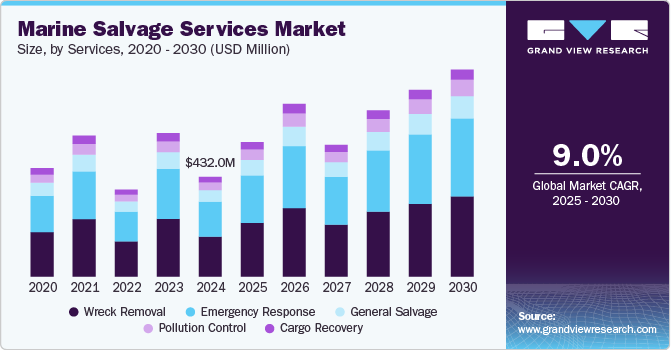
Commercial salvage services offer cargo recovery, vessel refloating, wreck removal, and environmental remediation. Economic benefits include asset recovery, legal liability reduction, and reputation maintenance. The salvage projects of MV Wakashio and MV Golden Ray showcase successful outcomes.
Technologies and Equipment in Marine Salvage
The latest technologies in marine salvage include AUVs, advanced lifting systems, and AI for planning. Essential equipment like salvage pumps, hydraulic cutting tools, oil booms, and diver support systems improve efficiency and safety.
The Role of Specialized Companies
Key players in the marine salvage industry like SMIT Salvage, Resolve Marine Group, and Ardent Global offer global salvage operations and wreck removal services. Skilled professionals, specialized equipment, and collaboration with government agencies and environmental organizations are crucial for success. An example of such collaboration is the post-Hurricane Helene recovery at South Carolina hydroelectric plant.
Environmental and Regulatory Considerations
Environmental impact of marine salvage activities includes disruption of marine habitats and pollutant release. Regulations like the International Convention on Salvage and MARPOL focus on preventing pollution. Sustainable practices like using eco-friendly methods and implementing EMS are essential.
Future Trends in Marine Salvage
Upcoming trends in marine salvage involve robotics, automation, data analytics, and modular equipment. Technology advancements will enhance emergency response and commercial salvage operations by enabling real-time monitoring, resource mobilization, and virtual reality training. Increasing vessel sizes and climate change pose challenges, while opportunities lie in offshore renewable energy projects and technological efficiency.
Conclusion
Marine salvage is a vital industry that safeguards maritime safety, protects the environment, and recovers valuable assets. Proactive planning, collaboration, and professional services are essential for successful salvage operations. Consider partnering with reputable marine salvage providers for commercial and emergency needs to ensure continuity and safety in maritime operations.
Frequently Asked Questions
What is the primary goal of marine salvage?
The primary goal of marine salvage is to recover vessels, cargo, and property after maritime incidents to prevent environmental damage, ensure navigational safety, and reclaim valuable assets.
How does technology impact marine salvage operations?
Advancements in technology, such as the use of ROVs, AUVs, and AI, have significantly improved the efficiency, safety, and effectiveness of marine salvage operations by enabling better planning, real-time monitoring, and precision in recovery efforts.
Why is environmental consideration important in marine salvage?
Environmental considerations are crucial because salvage operations can disrupt marine habitats and potentially release pollutants. Adhering to regulations and implementing sustainable practices helps minimize environmental impact and protect marine ecosystems.